Parking at Leipzig/Halle Airport: Car Parks in the Shadow of the DHL Hub
At Europe's largest DHL air-freight hub, passengers park beside an operation that never sleeps — and since January 2026, under a new operator reorganising more than eleven thousand spaces between Leipzig and Halle.

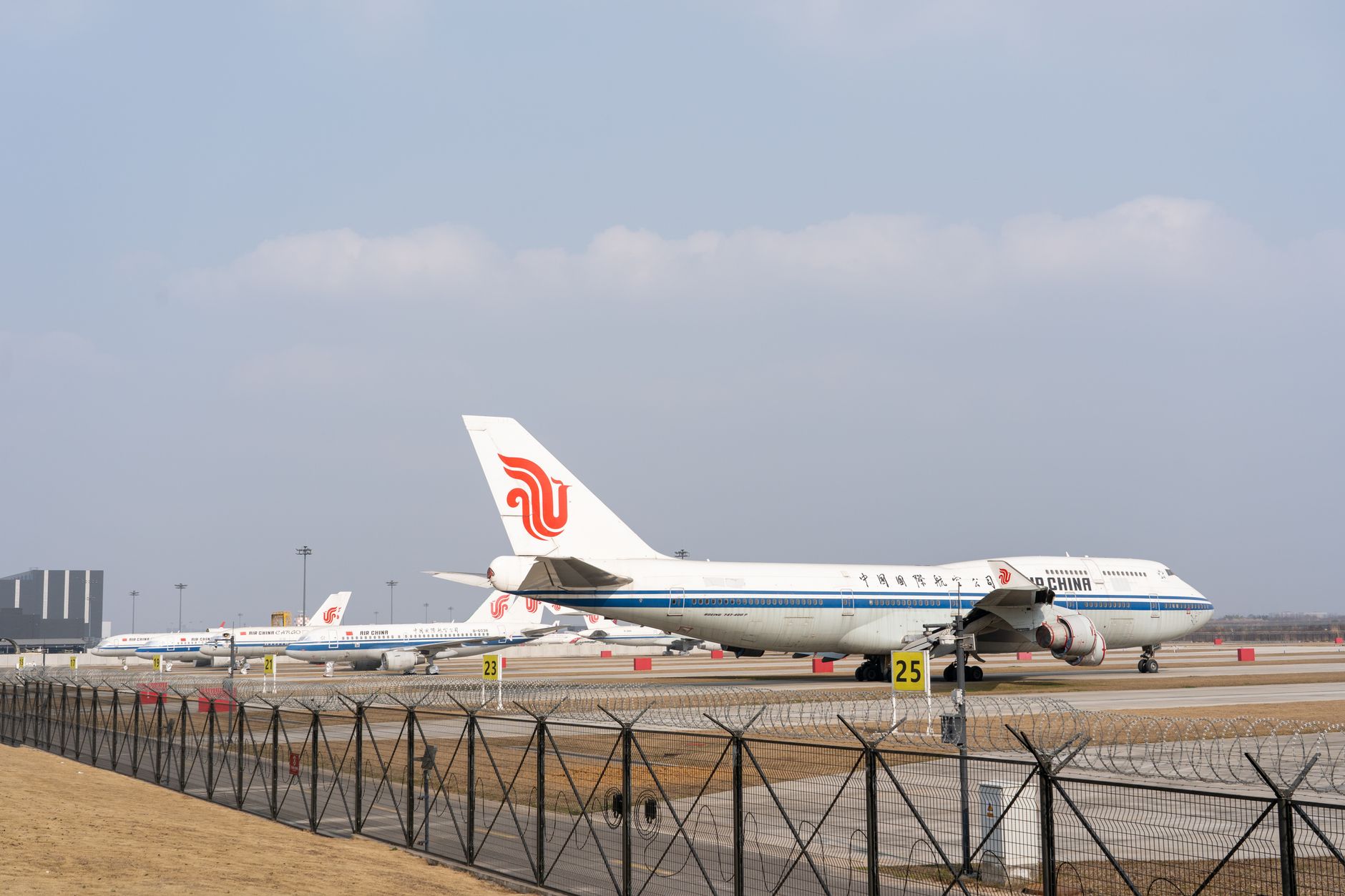
Fly over Schkeuditz at night and you will see more freighters taking off and landing than passenger jets by day. Leipzig/Halle Airport hosts DHL’s largest air-freight hub anywhere in the world, and that fact shapes the site more than a simple price list would suggest. For the 2.2 million-odd passengers who fly from here each year, it means something specific: a comparatively compact terminal bolted onto a far larger system that runs around the clock.
That has consequences for parking too, though not the ones you might expect at first. The car parks themselves are tiered by distance, much as at any German airport — P1 through to P21, with gaps in the numbering that trace back to how the site has grown. What actually sets Leipzig/Halle apart in 2026 is two things: a freshly appointed operator, and a cargo business that keeps the infrastructure running through the night regardless of what the passenger terminal is doing.
A Freight Hub With a Terminal Attached
DHL has run its European air hub here since 2008, and it is now the largest hub anywhere within the group worldwide. Over 6,000 people work for DHL and its associated companies on site, including the airline European Air Transport Leipzig, with more than 1,200 staff, and AeroLogic, the DHL-Lufthansa Cargo joint venture. On a typical night the hub handles up to 75 freighters, sorts around 350,000 shipments and moves up to 2,000 tonnes of cargo bound for more than 220 countries and territories. That makes Leipzig/Halle Germany’s second-busiest cargo airport after Frankfurt, and one of the largest in Europe by that measure.
None of this would be possible without the airport’s round-the-clock operating licence, confirmed by the Federal Administrative Court in April 2008. Between 22:00 and 06:00 a restricted night-flight regime applies to protect nearby residents, but commercial passenger traffic — and, crucially, freight — is exempted, and that exemption is exactly what DHL’s business model depends on. The airport has since spent more than €140 million on noise-protection walls and embankments, including sections south of the site and near the village of Freiroda.
For passengers, the practical upshot is that the site never really goes quiet. Car parks, barriers and shuttle buses are all built for traffic that runs continuously anyway because of the cargo side — a three-in-the-morning arrival back at the car isn’t the operational oddity it might be at a smaller regional airport with no freight business behind it.
The Car Parks: From P1 to P21
P1 and P3 sit right at the terminal, the classic short-stay and business car parks with hourly billing. P6 is closer still: the Premium area between Terminal A and Terminal B is camera-monitored and under a minute’s walk away — the shortest distance anywhere on site.
A notch cheaper, but without hourly billing, are P2 and P4: pure long-stay car parks with a 24-hour minimum, built for the fortnight in the sun rather than the short business trip. Right in front of the central check-in sits P11, officially meant for drop-off and pick-up and also, as it happens, home to the fast chargers (more on that below). Anyone wanting to park further out and more cheaply still has P14, P15, P20 and P21 — a longer walk or a shuttle ride, some of them seasonal.
The fact that the numbering runs from P1 to P21 without every figure in between being in use is no accident but a product of how the site has grown over the decades — a pattern found in very similar form at Stuttgart Airport, where the count runs from P0 to P26 with its own gaps.
What the Minute Out Front Costs: Kiss and Fly
Directly in front of Terminal B, lane 3 of the forecourt is reserved for private kiss-and-fly drop-offs; lanes 1 and 2 stay reserved for taxis, transfer services and contract customers. The first ten minutes on lane 3 are free, after which the charges step up sharply: roughly €7 for up to 20 minutes, roughly €14 for up to 30 minutes, roughly €28 for up to an hour. Anyone expecting to need more than a few minutes — because the luggage hasn’t reached the belt yet, say — is better off heading straight for P11 than idling on the forecourt.
P1, opposite the terminal, runs a similar short-stay logic: ten minutes free, then around €2 up to 30 minutes and €3 up to an hour, before the standard daily rates take over for longer stays. The pattern is the same in all three places — a short free grace period, followed by a charge steep enough to discourage the forecourt from turning into an informal short-stay car park.
Daily Rates and the Logic of the Weekly Bands
At P1 and P3, the hourly rate after the grace period runs to around €3, and a full day currently lists at around €27. Stay longer and the billing shifts from a daily rate to bands: a stay of four to eight days costs a flat sum of around €90, nine to fifteen days around €110, with further bands kicking in only beyond that. Anyone flying off for a week anyway pays next to nothing extra for that eighth day — here, as at other airports in this series, the most expensive day per night is the short stay, not the long one.
P2 and P4 work differently from the outset: no hourly rate, a 24-hour minimum, a day from around €20, a week from roughly €50 depending on the portal and how far ahead you book. The exact figures move noticeably between comparison sites — what holds reliably is the order of magnitude, and the fact that P2 and P4 stay clearly cheaper than P1 and P3 across a full week. The price shown at the point of booking or at the machine is always the one that counts.
The Seasonal Car Parks, P15 and P20
P15 sits a good ten minutes’ walk from check-in and operates as the low-cost area; P20 lies in the district of Kursdorf and, with luggage, needs closer to fifteen minutes or the shuttle. Both are the cheapest official car parks on site, but both open only for the warmer half of the year, roughly spring to autumn (as of 2026; the operator sets the exact opening and closing dates each season, and they are worth checking before booking). Access runs by QR code rather than number-plate recognition.
Anyone planning a longer winter trip therefore doesn’t have this option — P2 and P4 remain the cheapest available choice through the colder months. Anyone travelling for a week or more between spring and autumn, on the other hand, should at least weigh P15 against P2 and P4 on price before reflexively booking the nearest long-stay car park.
Eight Fast Chargers: Charging at the Airport
Right in front of the central terminal, on P11, EnBW runs eight fast-charging points rated up to 400 kilowatts, accessible around the clock. Charge there and the first hour of parking is free — a detail that doesn’t turn up in this form at any other airport covered in this series. For slower but longer charging, four Type 2 points at 22 kilowatts, run by Stadtwerke Leipzig, sit near the rental-car return by the mall; parking there is also free for the duration of the charge.
For an electric car, that’s worth a quick sum: anyone stopping at P11 anyway to top up charge will often cover the entire drop-off or pick-up within that free hour, without a parking charge coming into it at all.
A New Operator Since January 2026
On 1 January 2026, Goldbeck Parking Services GmbH took over the entire parking and mobility management operation at both Leipzig/Halle and Dresden airports. Mitteldeutsche Flughafen AG had awarded the Europe-wide tender in early October 2025; Goldbeck is now responsible for more than 11,500 spaces across the two sites, over 7,000 of them at Leipzig/Halle alone.
What that means in practice for travellers will only become clear over the coming months. Operator changes on this scale typically bring new online tariffs, reworked booking systems and, occasionally, changes to the technology at entry and exit barriers. Anyone working from an older price or a saved booking routine from before 2026 should double-check it before travelling — the underlying structure, P1 through P21 and the zone logic, stays in place, but individual terms can shift as the handover beds in.
Private Car Parks Away From the Site
As at practically every larger German airport, independent operators with their own grounds and shuttle service have set up around Leipzig/Halle. Comparison portals advertise day rates from around €2 to €8 and savings of up to 70 per cent against the priciest official car park — figures that work as a rough steer but depend heavily on your actual travel dates and how far ahead you book.
Two things matter more than price alone. First: how often does the shuttle run, and does it run deep into the night? The fact that the airport itself operates around the clock because of the cargo business doesn’t automatically mean every off-site operator does the same — that needs checking individually, especially for very early or very late passenger flights. Second: is the site fenced, lit and insured? The distinction between simply renting a space and an operator actually taking custody of the vehicle carries real legal weight, set out in full under valet parking. How a developed market of official car parks alongside independent operators looks at a larger northern German site is covered in the piece on parking at Hamburg Airport.
The Station Beneath the Terminal
Leipzig/Halle has its own railway station directly beneath the check-in area. S-Bahn Mitteldeutschland serves it with lines S5 and S5X every half hour; the journey to Leipzig main station takes 14 minutes, to Halle (Saale) 10 minutes. In long-distance traffic, IC line 55 (Cologne–Dresden) and IC line 56 (Emden–Hanover–Leipzig) call every two hours; there have been no ICE stops here since the 2017 timetable change.
That gives Leipzig/Halle — much like Hannover Airport, where the S-Bahn station sits beneath Terminal C — a genuine alternative to driving, particularly for travellers starting out from Leipzig or Halle itself. A week in the cheapest official car park easily runs to €50–90 in practice; two people travelling return by S-Bahn pay a fraction of that. The car still wins for very early or late connections outside the timetable, for larger groups, and whenever getting to the local station is itself awkward. If it is the city rather than the airport you are heading for, the free sites on its edge are covered under park and ride in Leipzig — they are expressly not suited to a flight.
Practical Notes
Holders of a blue EU parking permit or a German severe-disability pass carrying the symbols aG, H, B or Bl can park free for up to three hours in the short-stay zones. Accessible bays with step-free access to check-in are on the second floor of the multi-storey car park.
Note your level and sector before heading to the terminal — with several thousand spaces and a red-eye arrival with tired fellow travellers in tow, this is not a formality.
Check the height clearance if you’re arriving with a roof box or a larger vehicle; the open-air areas P2, P4, P15 and P20 are the simpler choice here than the multi-storeys.
Keep your ticket or booking confirmation to hand, whether printed or as a screenshot — particularly during the transition to the new operator, a technical glitch at the entry terminal is not a purely hypothetical risk.
Unlike a freight hub, Dortmund is a small, purely passenger-focused airport; the parking detail is under parking at Dortmund Airport.
All figures reflect the position in 2026 and, unless noted otherwise, are drawn from current comparison portals and press releases; the price shown at the point of booking or at the machine is always the one that counts. What holds is the underlying shape of the place: a compact passenger terminal sitting next to one of Europe’s largest freight hubs, its car parks reorganised under new management since January 2026. More airports are covered under Airport Parking.
Keep reading
Airport Parking
Parking at BER Airport: Why a 25-Minute Walk Is Worth €191
Parking at Berlin Brandenburg Airport in 2026: €280 a week in P1 and P2, €89 in P107. Every barrier price for the car parks and Economy sites, the cap that bites on day four, Kiss & Fly, and the FEX counter-argument.
Dr. Eva Sommer17 September 2026
Airport Parking
Munich Airport Short-Stay Parking: What the First Hour at the Terminal Costs
Short-stay parking at Munich Airport: hourly rates in the terminal car parks, Kiss & Fly's free minutes and the price curve into the afternoon (as of 2026).
Dr. Eva Sommer27 July 2026
Airport Parking
Cologne Bonn Airport Parking: the Fourth Day Costs One Euro
Parking at Cologne Bonn Airport in 2026: official tariffs for P1, P2, P3 and Parkplatz Nord, the online rate from €39 a week, the three-euro Sunday, and a check against Düsseldorf.
Dr. Eva Sommer17 September 2026
Airport Parking
Memmingen Airport Parking: P1 to P5, Shuttle Car Parks and the Sums from Munich
Parking at Memmingen Airport (FMM) in 2026: car parks P1 to P5, walks of 50 to 600 metres, online prices from the official booking system, shuttle parking in Holzgünz, and when the coach from Munich works out cheaper.
Dr. Eva Sommer25 September 2026
Airport Parking
Parking at Frankfurt-Hahn Airport: 126 Kilometres from Frankfurt
Parking at Frankfurt-Hahn (HHN) in 2026: the PD, P1, P2 and P3 car parks, walks of 150 to 800 metres, checked rates from the airport's own booking system, and the truth behind the €2.50-a-day claim.
Dr. Eva Sommer24 September 2026