Parking at Stuttgart Airport: Eight Free Minutes, Nine Car Parks
No other airport in this series shares its car parks with a trade fair - on exhibition days that shapes the price more than the choice between P4 and P14 ever does.

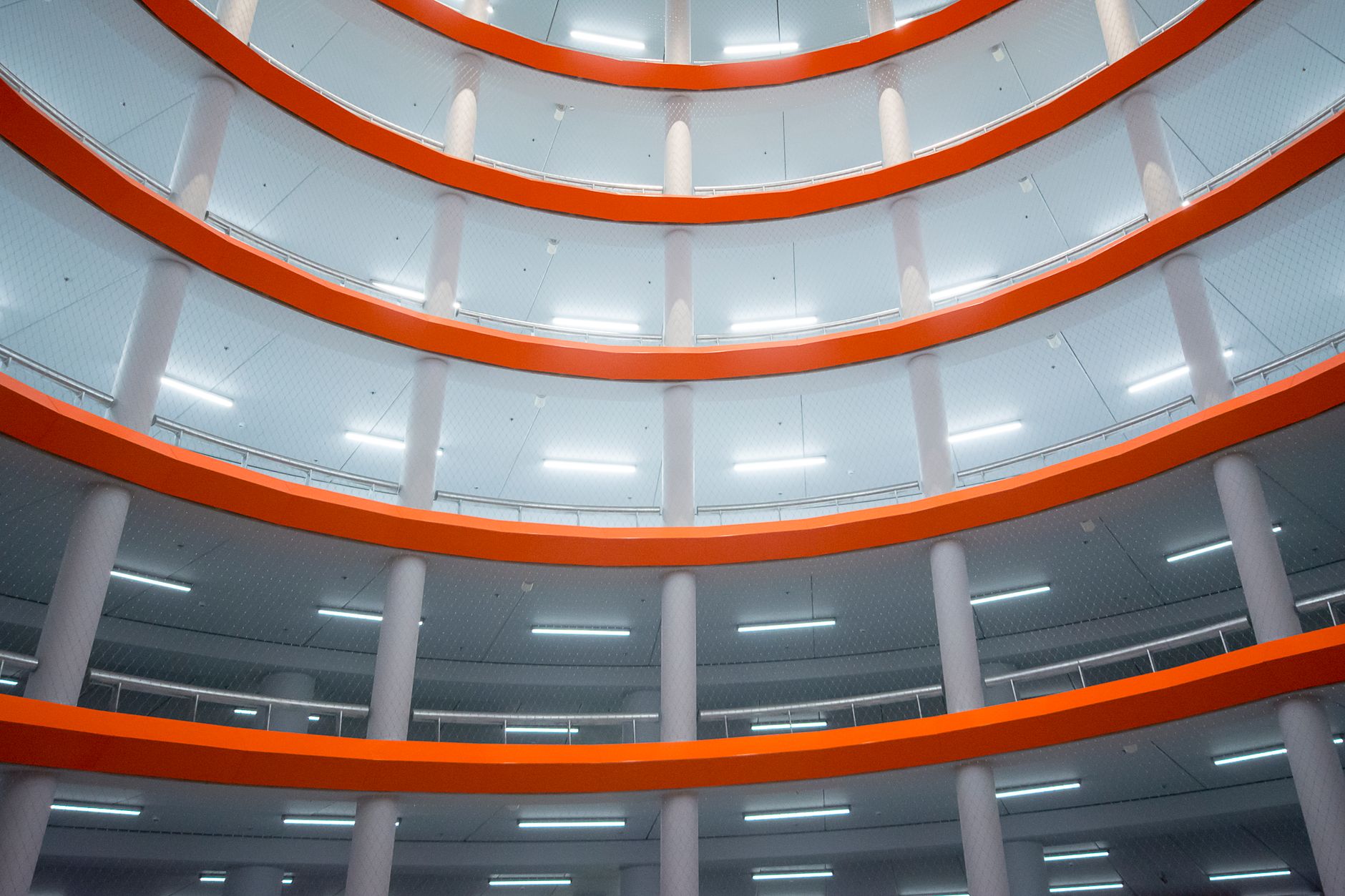
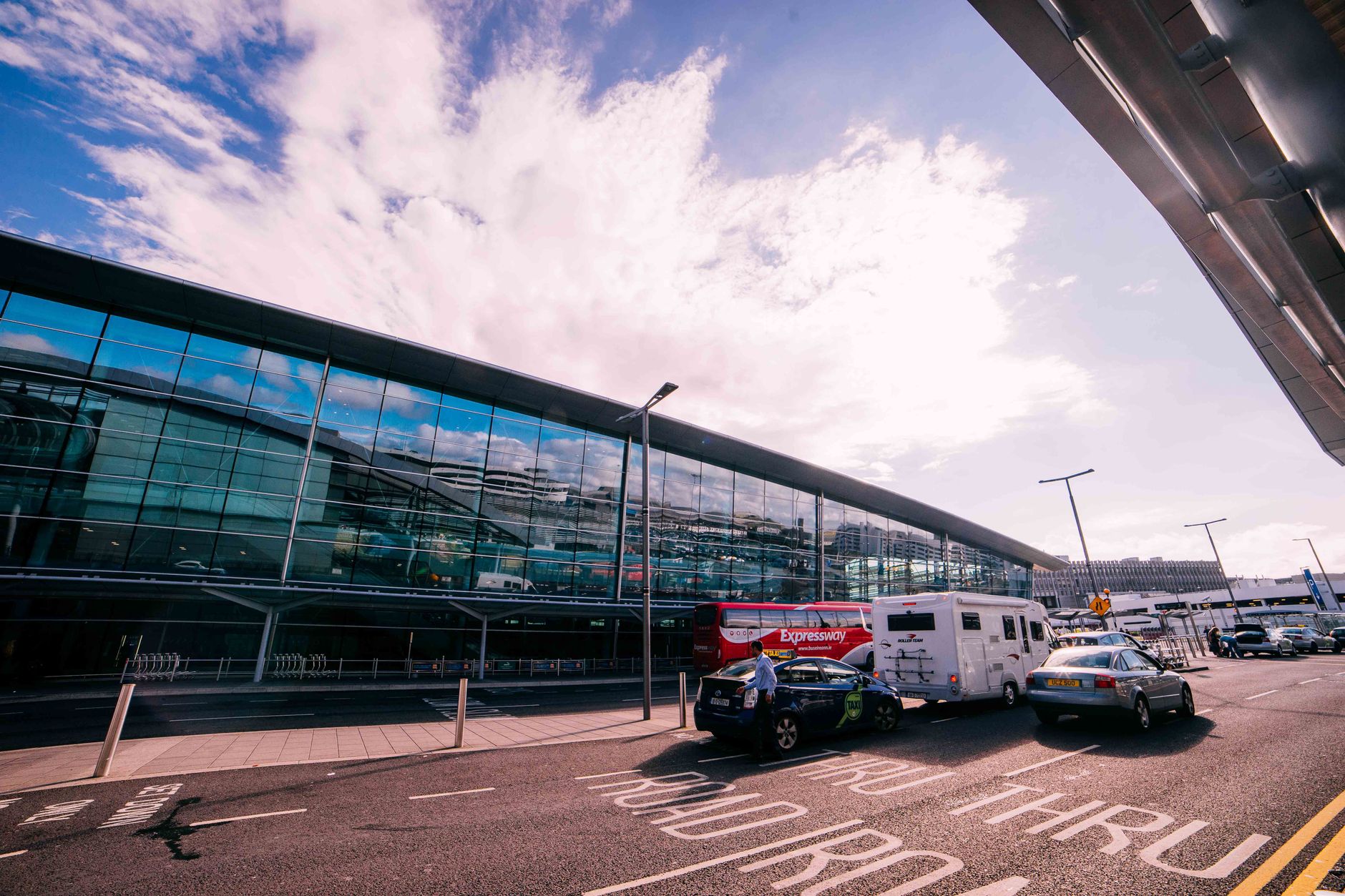
Stuttgart Airport sits on the Filder plateau, directly opposite the Stuttgart trade fair grounds, separated only by the A8 motorway. That neighbour is not a footnote to the parking question. Anyone looking for a space here is competing not just with other air travellers but, on certain days of the year, with tens of thousands of exhibition visitors heading for the very same car parks. That sets Stuttgart apart from every other airport in this series - in Munich, Hamburg or Düsseldorf, nothing comparable exists.
On ordinary days between fair dates the picture is straightforward: a tiered system of nine officially operated car parks, clearly separated by distance and specification, plus independent operators working the area around the site. Anyone who knows what to ask reaches a decision within minutes - and anyone whose trip happens to fall near a trade fair date should read this before booking, not after.
The car parks at a glance: from P0 to P26
The numbering is not continuous - several numbers are missing between P0 and P26, because the scheme has grown over decades and not every former area is still in operation. Currently open (as of 2026) are P0, P2, P3, P4, P5, P6, P12, P14 and P26.
P14 sits closest to the terminal: a fully covered multi-storey reached across a footbridge in about a minute, and fitted with electric-vehicle charging points. P4 and P6 follow a short walk further out, also built as covered multi-storeys; P6, at roughly eighty metres from the entrance, counts among the shortest distances anywhere on the site. P4 also carries a good number of charging points.
P3 and P5 are open-air short-stay areas close to the terminal but without a roof - convenient for a quick stop, less so if the car is going to sit outdoors for days. P2 sits in the middle at around five minutes’ walk and is covered as well.
P0 is the largest and, at the same time, the most distant of the inner areas: uncovered, about ten minutes on foot to the terminal, but the cheapest option in the official tier. P12 sits in a similar price band, also in the open.
P26, finally, already belongs to the trade fair’s west entrance and sits at roughly nine minutes’ walk - the outer edge of what still counts as terminal proximity. In return it is regularly the area with the most free spaces when the inner multi-storeys fill up on busy days, a point that matters again further down.
Anyone travelling with a roof box or a bike rack should head for one of the open-air areas regardless: the entrances to the multi-storeys are built for standard vehicle heights, and that tends to become obvious only at the barrier, when it is too late to change plans.
The 2026 prices: a question of zone
At Stuttgart Airport one variable dominates the price: distance to the terminal. The shorter the walk, the higher the tariff - a logic found at most German airports in some form, but here it resolves unusually cleanly into four tiers.
The cheapest tier is P0 and P12: a daily rate up to around €20, a week running roughly €75 to €80.
The middle tier, P2, runs a daily rate of roughly €25 to €34, with a week costing around €95 to €100.
The upper tier - P4 and P6 - costs up to €35 to €39 a day, and roughly €110 to €135 a week.
P14, the premium area right at the footbridge, sits at a similar level to P4 and P6, occasionally a touch above. The premium over P0 works out at roughly €50 to €60 across a week - for a little over eight minutes’ less walking.
The short-stay areas P3 and P5 bill in 30-minute increments, at around €4 per half hour, with a daily cap that can run past €50 at the top end. That is a tariff built for collections and short visits, not a week’s holiday.
At certain times of year - around Easter, Whitsun, or in summer between late June and mid-September 2026 - the operator advertises promotional weeks with rates from around €29 in selected zones, usually tied to booking well ahead and limited allocations. Anyone planning months in advance should keep an eye on these windows; anyone booking at short notice will generally pay the standard rate.
All the figures above are researched ranges rather than fixed prices - the actual amount depends on season, occupancy and how far ahead you book, and the operator adjusts them continuously. Only the tariff shown at the point of booking is binding.
Eight free minutes: the kiss-and-fly rule
Directly in front of the departure halls, a free allowance of eight minutes applies - enough to let someone out with their luggage, not enough for a lingering goodbye.
That is noticeably tighter than elsewhere: Nuremberg allows fifteen minutes, and Hannover allows thirty minutes inside the car parks themselves. Anyone in Stuttgart who needs more time - collecting someone when the baggage belt has not yet started, say - is better off driving straight into one of the short-stay areas P3 or P5 and paying by the half hour there, rather than watching the clock in the kiss-and-fly zone and ending up on the full tariff anyway.
Overstay the eight minutes and the standard short-stay tariff applies from the first minute over - there is no grace margin built in.
When the trade fair parks too: the airport-Messe effect
This is the point that separates Stuttgart from every other airport in this overview. The Landesmesse Stuttgart trade fair grounds sit directly opposite the runway, separated only by the A8 motorway - a footbridge links the two sides, and a large covered multi-storey, known locally as the Bosch-Parkhaus, serves both streams of traffic from one shared structure holding several thousand spaces.
On ordinary days that is an advantage: more capacity, short walks, a single operator for both. On fair days the picture reverses. When a major public exhibition is on - CMT in January, one of Europe’s largest consumer fairs, or trade shows such as AMB - demand on the shared areas rises sharply. The operator sometimes publishes its own reduced tariffs for exhibition visitors on such dates; for air travellers, the same event often means the opposite: tighter availability on precisely the car parks closest to the terminal.
The practical consequence: anyone flying from Stuttgart whose trip happens to coincide with a fair date should, first, book noticeably earlier than usual and, second, plan on one of the more distant areas - P0, P12 or, failing that, P26 - rather than hoping for a free space in P14 or P4. The trade fair’s public events calendar is worth checking as soon as travel dates are fixed. How prices and availability behave at a site with no such effect at all is set out in the piece on parking at Munich Airport, where terminal distance and season alone decide the price.
Off-airport operators and valet parking services
As at every larger German airport, independent operators have set up around Stuttgart charging less than the official tiers. Comparison portals show weekly bookings running roughly between €55 and €95, some including a shuttle, others run as a valet service with the car handed over at the terminal - against roughly €95 to €135 in the official multi-storeys P4, P6 or P14, that is a meaningful gap, particularly from two weeks’ travel onward. How a comparable market looks at a northern German site is described in the piece on parking at Hamburg Airport.
The airport’s own information explicitly advises handing vehicles over only to “valet or shuttle services officially operated by the airport” - a phrase that points to a real problem: unauthorised operators who take vehicles on public roads around the site and, in some cases, leave them there uninsured. Before agreeing to a key handover, it is worth checking who is liable if something goes wrong - the legal difference between renting a space and a genuine bailment is considerable, as set out in detail under valet parking.
Anyone looking for a reputable outside operator should check three things: a fixed business address with proper registration rather than just a mobile number, written confirmation of the handover time, and reviews that speak specifically to collections at unusual hours - not only the smooth mid-morning drop-off.
The S-Bahn alternative: S2 and S3 to the main station
The Flughafen/Messe station sits directly beneath the terminal and is served by lines S2 and S3. The S2 runs between Schorndorf and Filderstadt via the main station; the S3 runs between Backnang and the airport - in both cases without changing trains from the city centre. The journey to the main station takes around 27 minutes, with trains roughly every ten to twenty minutes during the day and an hourly service through the nights from Friday to Saturday and Saturday to Sunday.
Twenty-seven minutes is noticeably longer than Nuremberg, where the U-Bahn covers the distance in a little over ten, and longer than Hannover’s eighteen. The S-Bahn is therefore not quite the clear-cut case it is at those airports - but the sums still tend to favour the train: a week in the cheapest car park costs around €75 to €80; two people making several return trips by S-Bahn will usually pay considerably less.
Where the car still wins: very early or very late flights outside the frequent service, groups of three or more with the luggage to match, and journeys where reaching the main station is itself awkward. For business travellers with hand luggage and for couples without large cases, the S-Bahn is in most cases both the cheaper and the more relaxed option.
Booking ahead and the usual pitfalls
As at practically every German airport, the biggest saving here lies not in choosing the right car park but in the timing of the booking. Reserving online in advance generally costs noticeably less than paying at the barrier and secures a guaranteed space - no small thing in the weeks around school holidays and major trade fair dates.
Three points are regularly overlooked. The height limit: the multi-storeys are built for standard vehicle heights; with a roof box or a bike rack, head for one of the open-air areas P0, P3, P5 or P12. The number plate: advance bookings are tied to the plate given at the time of booking; arrive in a different car and the barrier will not lift. The delayed return flight: additional days are generally billed at the standard rate rather than the cheaper advance price, so anyone cutting the return date fine risks a real surcharge. It pays to plan the return generously rather than exactly. How a larger site with even finer zone tiering and automatic number-plate recognition is organised is set out in the piece on parking at Düsseldorf Airport.
An airport with an unusual double role as both a passenger hub and DHL’s largest freight hub is Leipzig/Halle, covered under parking at Leipzig Airport. Travellers after something far smaller and simpler within the same region should see parking at Baden-Airpark, a hundred kilometres west. And anyone weighing Stuttgart against a departure across the border should know the tariffs there are quoted in another currency and another order of magnitude: what parking at Zurich Airport actually costs shifts the comparison considerably.
In the end, the Stuttgart decision turns on two variables rather than one: how far you are willing to walk, and whether the trip happens to coincide with a trade fair date. Settling both questions before booking, rather than at the terminal, generally saves more than comparing individual car park prices ever will. More airports are covered under Airport Parking, and the wider case for trains and public transport under Park & Ride.
Keep reading
Airport Parking
Parking at Dortmund Airport: Seven Car Parks, One Terminal
Parking at Dortmund Airport, 2026: seven car parks P1 to P7, a shuttle doubling as bus route 490, new disabled-parking rules from April, and operators in Unna.
Dr. Eva Sommer21 July 2026
Airport Parking
Parking at Munich Airport: What Proximity to the Terminal Actually Costs
Parking at Munich Airport: tariffs from 1 April 2026, terminal versus economy, the new P8 car park, and the maths on when the shuttle is actually worth it.
Dr. Eva Sommer12 August 2026
Airport Parking
Parking at Nuremberg Airport: Two Minutes' Walk, Fifteen Free
Parking at Nuremberg Airport: P1 to P4 with walking times and weekly rates, the 15 free minutes inside the car park, and when an off-airport operator pays.
Dr. Eva Sommer14 August 2026
Airport Parking
Cologne Bonn Airport Parking: the Fourth Day Costs One Euro
Parking at Cologne Bonn Airport in 2026: official tariffs for P1, P2, P3 and Parkplatz Nord, the online rate from €39 a week, the three-euro Sunday, and a check against Düsseldorf.
Dr. Eva Sommer17 September 2026
Airport Parking
Parking at Hannover Airport: €90 to €111 a Week
Parking at Hannover Airport in 2026: weekly rates from €90 to €111, P4 closed for modernisation, P10 open April to October only — the differences in detail.
Dr. Eva Sommer15 August 2026