Park and Ride in Germany: What the Concept Actually Delivers
Park and ride is priced differently in every major German city, and the gaps are wider than the shared name suggests. An orientation before you rely on a system you don't already know.

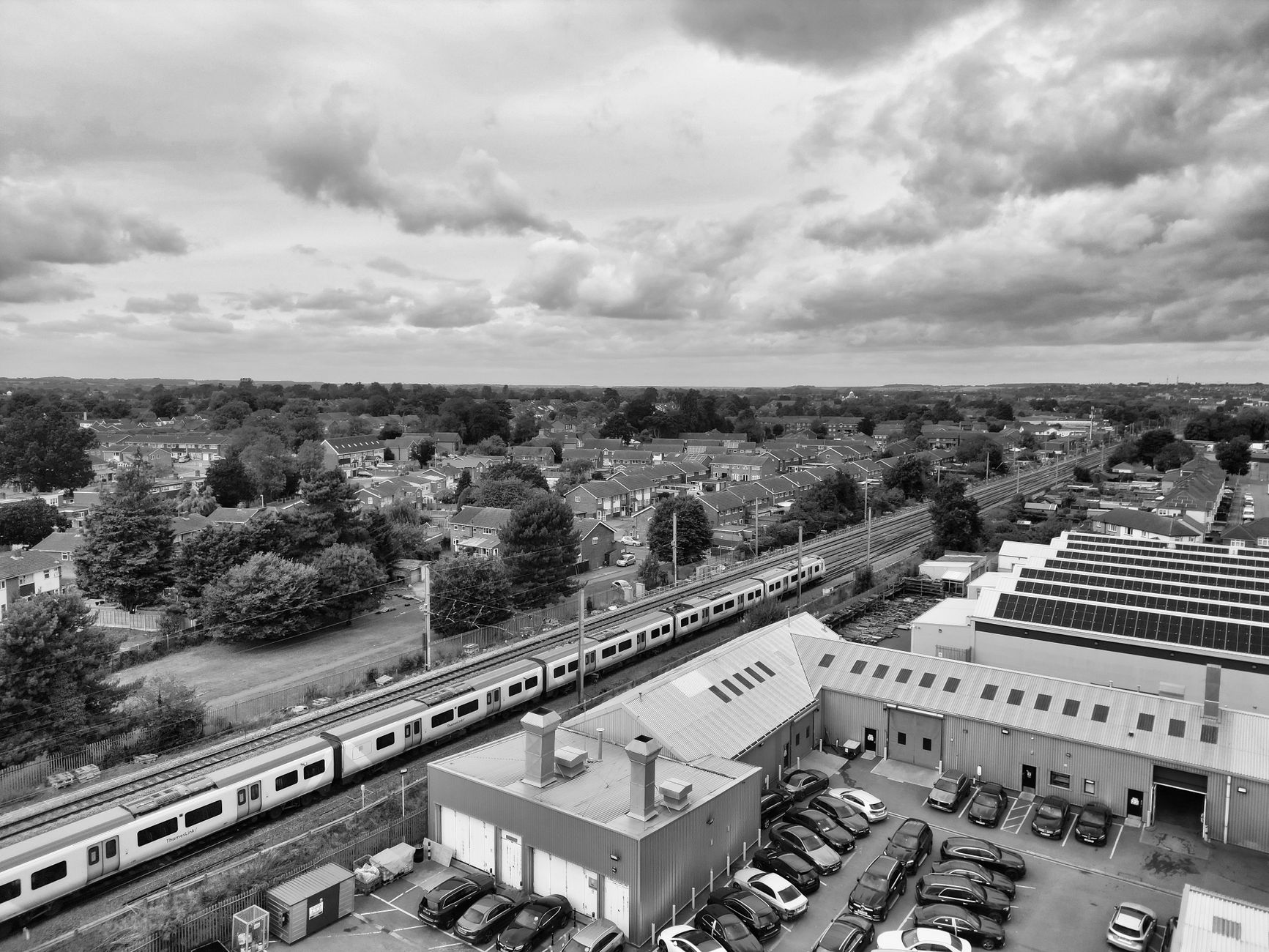
Park and ride sounds like a single, uniform concept. It isn’t. Every German city sets its own price, its own conditions and its own level of digitisation, and carrying an assumption from one city over to another is a reliable way to get the sums wrong. Here I set out the major systems and when the concept genuinely pays off.
Munich: the cheapest of the cities compared here
The Munich transport association (MVV) runs 38 P+R sites with more than 14,000 spaces across the city and its surrounding area — the largest municipally-run tally among the cities compared here. On top of that sit further P+R areas run by other operators, with their own prices and conditions.
Day tickets range €0.50 to €1.50, depending on price tier. For comparison: parking in central Munich averages €4.33 an hour — among the most expensive average city-centre parking rates in the country. Over an eight-hour working day, that gap adds up to several hundred euros a month.
The network is split into four tariff zones, with Zone M covering the innermost city area. Tickets are available from the machine as paper or digital, entered against your number plate, with monthly passes additionally available through the EasyPark app. One important security note the MVV itself flags: fraudulent QR codes headed “Direktzahlung” (“direct payment”) have appeared on some machines, redirecting to a fake “ParkPay” page. Pay only through the machine itself or the official app — never through a stuck-on QR code.
Hamburg: pricier, but with a clear reward structure
Hamburg’s model runs on a different logic. The day ticket costs €2, the multi-day ticket €4 per day — deliberately double, to separate commuters from long-stay parkers. If you commute daily, never buy the multi-day ticket.
The most interesting line is the €100 annual card, though it comes with a condition: it’s only available in combination with an HVV subscription, the Deutschlandticket, or a BahnCard 100. Meet that condition and the card works out at 27 cents a day — at around 50 uses a year it pays for itself against the day ticket. Full detail on that system, including what happened to occupancy once the charge was introduced, is under park and ride in Hamburg.
What the two systems have in common
Price gaps aside, Munich and Hamburg run on the same underlying principle: park and ride isn’t subsidised long-stay parking — it’s a reward for combining the car with public transport. Want to park without continuing on by bus or train, and in both cities you either pay the full rate or look elsewhere.
That shows most clearly in the discounted annual cards, which are structurally tied to an existing public-transport subscription. The cities aren’t subsidising the car — they’re subsidising the switch. That distinction is easy to miss when judging the concept.
Digitisation: eticCORE from 2026
One technical shift touches every P+R system equally. The VDV e-ticketing standard is being modernised with eticCORE in 2026, aimed at reducing ticket purchases across different transport associations to a single click. For you as a user, that means, over the medium term, fewer separate apps per city, a more consistent payment experience, and — eventually — a real simplification for commuters who cross between transport associations regularly.
Until that standardisation reaches full coverage, though, the reality stays fragmented: every city runs its own app, its own machines, its own zones. Before using an unfamiliar city’s system for the first time, check how it actually works rather than carrying habits over from home.
The pattern in other major cities
Munich and Hamburg get the detailed comparison here because both have solid, publicly documented tariffs behind them. Other major German cities — Berlin, Cologne, Frankfurt — run their P+R sites on the same basic pattern: organised municipally or through the local transport association, day tickets in the low single-digit euros, and discounted long-term cards tied to an existing transport subscription. The exact figures differ city to city and change regularly — check them with the local transport association before your first use rather than relying on the Munich or Hamburg numbers quoted here.
A year’s sums, made concrete
To put the scale into a real case: a commuter driving from a Munich outer station to a Zone M P+R site on 220 working days a year, at a mid-tier tariff of around one euro, pays roughly €220 a year for the parking — on top of the transit ticket they’d need anyway. Drive the same distance straight into the city centre instead and park there at the average rate of €4.33 an hour for an eight-hour day, and parking fees alone would run to several thousand euros a year — before fuel, wear, and the daily search for a space are even added in. That gap is why P+R pays off on a fixed commute almost every time, even once the few minutes the changeover costs are factored in.
The maths against city-centre parking
To put the numbers in perspective, a direct comparison helps. Parking in central Hamburg currently costs €2 to €5.50 an hour in the central multi-storeys. Over a regular eight- to nine-hour working day, that puts the city-centre tariff at several times the price of a P+R day ticket — before fuel, wear, and the search for a space are even factored in.
That search appears in no table but costs real time: in dense inner-city districts, ten to fifteen minutes is realistic, and it repeats every working day. Annualised, that produces a figure most commuters underestimate.
In fairness, the honest accounting also includes this: P+R isn’t free, and it costs you flexibility. The car sits on the edge of the city, and a spontaneous detour after work is no longer straightforward.
When the concept genuinely pays off
The sums don’t work out the same everywhere. Three situations argue clearly for it.
You live outside the dense transport network. Where the nearest station means a twenty-minute walk or a bus with two changes, driving to the station is what makes the whole journey workable.
You make the same trip into the centre regularly. For a fixed, recurring commute, P+R is almost always the better option — unlike a day with three scattered appointments across the city, where the flexibility you give up costs more than the parking fee you save.
You already hold a Deutschlandticket or a comparable subscription. The onward leg is then already paid for, and the discounted annual card makes the parking itself close to free.
Arguing against it: a short walk. Reach the station on foot in five minutes and the car is a detour.
Before you set off: check occupancy
Many sites now show online how many spaces are free in real time. That sounds minor, but it removes the concept’s biggest practical drawback: uncertainty. Arrive at a full site at 7.40am and you have no plan B and lose twenty minutes. Checking in advance turns a risk into a piece of information — use the display before you leave, not on the way.
For a look at a noticeably stricter system with a hard-checked qualifying condition, see park and ride in Amsterdam. A third variant, where the parking itself stays free but is tied to a valid ticket and a 24-hour maximum, is set out under park and ride in Cologne.
All figures reflect the position in 2026 and are adjusted regularly by the individual transport associations; check the current tariffs for your city before travelling. What holds: P+R pays off most on a fixed, recurring commute paired with an existing transport subscription — and least when the walk to the station is short to begin with. More systems are covered under Park & Ride.
Keep reading
Park & Ride
Park and Ride in Hamburg: Two Euros a Day, a Hundred a Year
Park and ride in Hamburg: a €2 day ticket, a €100 annual card and the condition attached to it — plus why usage fell after the charge was introduced.
Dr. Eva Sommer14 August 2026
Park & Ride
Park and Ride Munich: 38 City Sites, Three Price Levels, Day Rates from €1
Park and ride in Munich in 2026: the 38 sites of the city-owned P+R Park & Ride GmbH with more than 14,000 spaces, day rates of €1.00 to €2.00, which U-Bahn and S-Bahn lines they serve, the standard rate for non-travellers, and how it compares with parking in the centre.
Dr. Eva Sommer25 September 2026
Park & Ride
Park and Ride Amsterdam: €6, but Only on Condition
P+R Amsterdam in 2026: €6 per 24 hours off-peak, €13 before 10am — and the public transport rule that regularly costs visitors the discount.
Dr. Eva Sommer13 August 2026
Park & Ride
Park and Ride Stuttgart: 215 Sites Between the Basin and the Fildern
Park and ride in Stuttgart 2026: 215 sites with roughly 17,370 spaces across the VVS network, a six-month subscription instead of a day ticket – and why the city's basin shapes where it all sits.
Dr. Eva Sommer11 August 2026
Park & Ride
Park and Ride in Cologne: Free Parking, but Only With a Ticket
Park and ride in Cologne in 2026: 24 KVB sites, around 5,400 spaces, parking free of charge — with a valid ticket and for no more than 24 hours. Fares, Weiden West, Porz and the low-emission zone.
Dr. Eva Sommer17 September 2026