Park and Ride in Hamburg: Two Euros a Day, a Hundred a Year
Hamburg's annual card costs €100, which works out at 27 cents a day. The catch lies not in the price but in the qualifying condition — and in the observation that the sites have grown emptier since charging began.

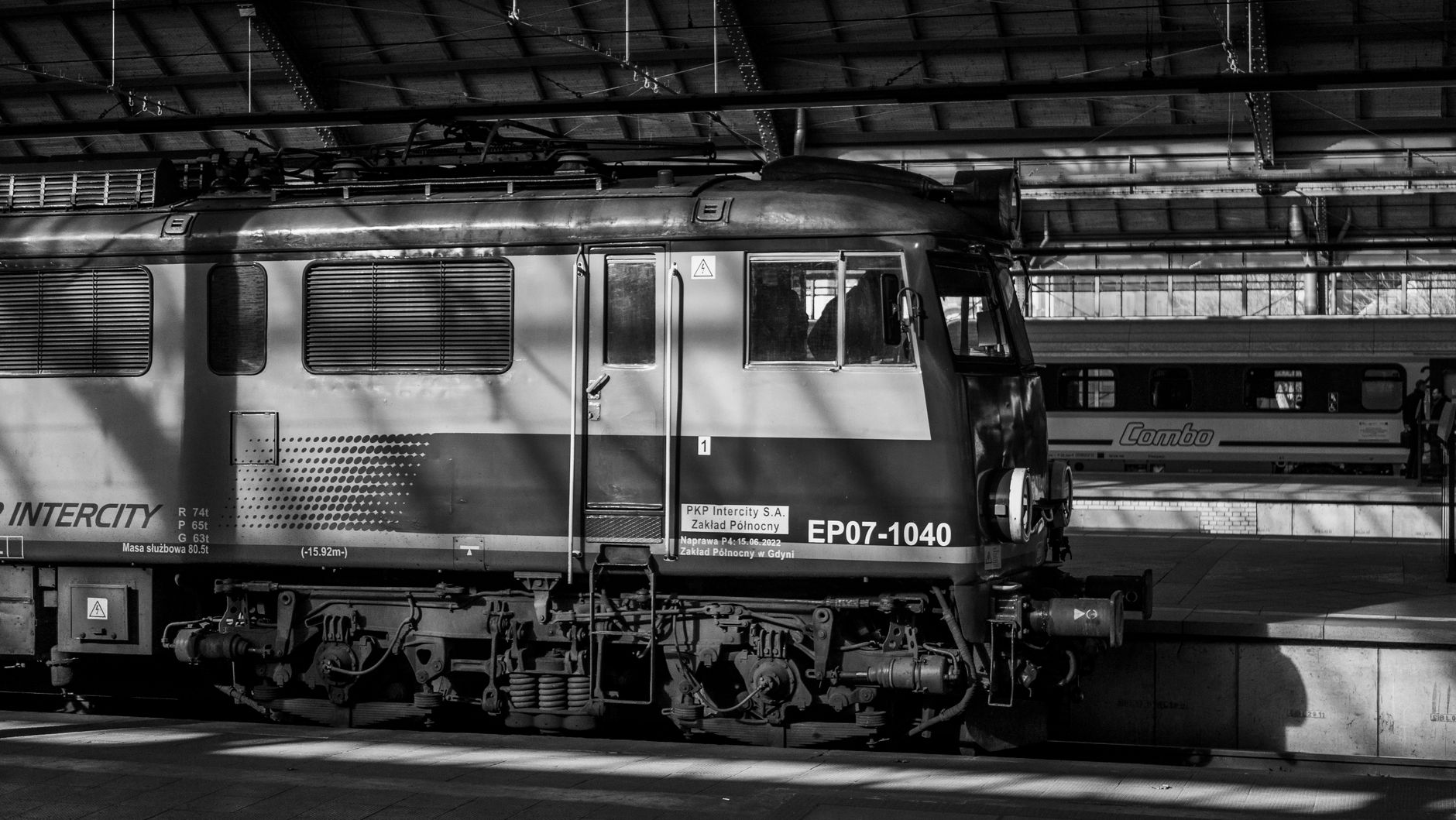
Park and ride is a concept with a tension built into it. It is meant to persuade people to leave the car at the edge of the city — and it works only where that exchange is cheaper for the individual than the alternative. Hamburg has recalibrated this arithmetic several times in recent years, and the results are instructive.
The city runs its sites at selected U-Bahn and S-Bahn stations across the urban area. They are chargeable as a matter of principle, and use is tied to a condition: you must continue your journey on HVV public transport. A P+R space is not a cheap long-stay car park on the edge of town but an offer with a defined purpose.
The tariffs
| Ticket | Price | Conditions |
|---|---|---|
| Day ticket | €2.00 | 24 hours, from the machine |
| Multi-day ticket | €4.00 per day | maximum 15 days, from the machine |
| 30-day ticket | €20.00 | 30 days, maximum 24 hours per use |
| Annual card | €100.00 | only with an HVV subscription, Deutschlandticket or BahnCard 100 |
That table contains an oddity most users are unaware of: the multi-day ticket costs twice as much per day as the day ticket. Four euros against two.
That is not an error but a steering measure. The day ticket is intended for commuting — out in the morning, back in the evening. The multi-day ticket covers the case of a vehicle standing for several days, during a trip for instance. That case occupies a space continuously and blocks it for the daily turnover the site exists to serve. Double the price is the answer to it.
For you a plain rule follows: if you commute daily, never buy a multi-day ticket. Two day tickets cost four euros; two days on the multi-day ticket cost eight.
The annual card and its condition
The most interesting line is the annual card at €100. Spread over 365 days that is 27 cents a day; over 220 working days, the realistic commuting case, it is 45 cents.
Against the two-euro day ticket, the annual card therefore pays for itself after 50 uses — roughly two and a half months of regular commuting. Anyone driving to the station twice a week reaches that threshold within half a year.
The catch lies not in the price but in the qualifying condition: the annual card is available only in combination with an HVV subscription, the Deutschlandticket or a BahnCard 100, and it is issued at HVV sales points rather than from the machine.
In transport-planning terms that is consistent. What the city subsidises here is not parking but the combination of parking and travelling. Anyone who already holds a Deutschlandticket — and by now that is a great many commuters — gets the space for a sum that barely covers its running costs. Anyone who only wants to park pays the full daily rate.
In practice: check first whether you already meet the condition. If you do, the annual card is the only sensible choice for regular use. If you do not, it is worth costing the two products together rather than separately.
What the charge achieved
Hamburg has extended charging to further sites in stages. The documented consequence is striking and deserves a sober reading: usage of the affected sites has fallen.
That can be read two ways, and both readings are correct.
From a management point of view it is a success. Before the charge, P+R sites were being used substantially for other purposes — as long-stay parking for residents, as somewhere to leave a second car, sometimes for weeks. Two euros is enough to make that unattractive. Arrive at a Hamburg P+R site today and you are more likely to find a space than you were.
From a transport-policy point of view it is ambivalent. Some of the vehicles that stopped coming are not parked elsewhere — they are driving on into the city, which is precisely what P+R exists to prevent. Two euros is small against the cost of driving into the centre, but it is visible, and visible small sums influence decisions more than their size suggests.
For your own decision the first reading matters more than the second: the sites are more dependably usable now. That is the practical value you get for your two euros.
Before you set off: check occupancy
The sites show online how many spaces are currently free. It is a small function with a large effect, because it removes the concept’s decisive drawback.
The reason people avoid P+R is rarely the price. It is the uncertainty: arrive at a full site at 7.40am and you have no plan B and lose twenty minutes. A display that tells you in advance converts a risk into a piece of information.
Make a habit of checking before you leave — not on the way, but before setting off. That is the only point at which you can still change plan.
When park and ride is genuinely the better choice
The calculation does not come out the same everywhere. Three situations argue clearly for it.
You live outside the dense network. Where the nearest station means a twenty-minute walk or a bus with two changes, driving to the station is the part that makes the whole journey workable.
You are heading into the city centre. Parking there costs considerably more than two euros a day, and the search for a space is a further cost in time. The logic of centre parking management is set out under Costs & Rules.
You already hold a Deutschlandticket. The onward journey is then paid for, and the annual card makes the parking all but free.
Arguing against it: the short walk. If you can reach the station on foot in five minutes, the car is a detour. And likewise the multi-day stay — the tariff is deliberately not built for it. To leave a vehicle while travelling, find a site intended for that; how the equivalent looks at airports is set out in parking at Munich Airport.
The counter-calculation: driving all the way in
To give those two euros a scale, it is worth comparing directly with the alternative P+R is meant to replace.
Drive into central Hamburg and you pay a parking tariff that, depending on zone and time of day, runs to several euros an hour. Over a working day of eight or nine hours that adds up to a multiple of the P+R day ticket — and that is before fuel, before wear, and before the time that passes between entering the centre and actually parking.
Add an item that appears in no table: the search for a space. In densely built districts, ten to fifteen minutes is realistic, and it recurs every working day. Annualised, that produces a figure most people find surprising.
Conversely, honesty requires noting that P+R is not free. You pay two euros for the space plus the public transport fare, and you give up flexibility: the car is at the edge of the city, and a spontaneous detour after work is no longer available.
The decision therefore turns not on price alone but on how regular your journey is. For a fixed, recurring commute, P+R is almost always superior. For a day with three scattered appointments across the city it is the wrong choice — there you lose more in mobility than you save in parking charges.
A note on bicycles
Hamburg explicitly extends park and ride to bicycles — many stations offer stands of varying quality, from a simple row of hoops to lockable boxes.
For short feeder journeys that is the more economical solution, and it occupies no car space. If you have two or three kilometres to the station, look at this option before taking the car: the bike costs less, stands nearer the platform, and is still available at eight in the morning.
What a considerably stricter system looks like, where the cheap rate is tied to a condition the system checks, is covered in park and ride in Amsterdam.
How parking works out at a mid-sized airport with a direct rail link is under parking at Hannover Airport.
A system that, unlike Hamburg’s paid annual card, is entirely free of charge is found in Düsseldorf, covered under park and ride in Düsseldorf.
If you would rather not spend the two euros at all and mean to find a free space in the city instead, read the tally under free parking in Hamburg first — it is soberer than the lists in circulation suggest.
All amounts reflect the position in 2026. Hamburg adjusts tariffs and the list of chargeable sites regularly; what any given site currently costs is published in the city’s official overview. What does not change is the structure of the decision: from about fifty uses a year the annual card is the right choice — provided you meet the condition attached to it. More locations are covered under Park & Ride.
Keep reading
Park & Ride
Park and Ride in Germany: What the Concept Actually Delivers
Park and ride in 2026, city by city: Munich between €0.50 and €1.50 a day, Hamburg with a €100 annual card, and the maths against parking in the city centre.
Dr. Eva Sommer15 August 2026
Park & Ride
Park and Ride Amsterdam: €6, but Only on Condition
P+R Amsterdam in 2026: €6 per 24 hours off-peak, €13 before 10am — and the public transport rule that regularly costs visitors the discount.
Dr. Eva Sommer13 August 2026
Park & Ride
Park and Ride Frankfurt: 2,152 Spaces for 463,000 Commuters
Park and ride in Frankfurt in 2026: 13 sites, 2,152 spaces for 463,000 daily commuters – and the first real expansion since 1996, tied to the RMV ticket.
Dr. Eva Sommer9 July 2026
Park & Ride
Park and Ride in Cologne: Free Parking, but Only With a Ticket
Park and ride in Cologne in 2026: 24 KVB sites, around 5,400 spaces, parking free of charge — with a valid ticket and for no more than 24 hours. Fares, Weiden West, Porz and the low-emission zone.
Dr. Eva Sommer17 September 2026
Park & Ride
Park and Ride in Leipzig: Free, No Ticket Required, No Barrier
Park and ride in Leipzig in 2026: seven city sites with around 3,130 spaces, all free of charge and open around the clock. Fares, the Messe, Stötteritz and the low-emission zone.
Dr. Eva Sommer17 September 2026