Parking at the Allianz Arena: Fröttmaning on Matchday and Every Other Day
Two addresses a few hundred metres apart, two entirely different pricing systems: the Allianz Arena's own barrier-free car park and the park-and-ride facility right beside it. What applies on a matchday — and what applies every other day.

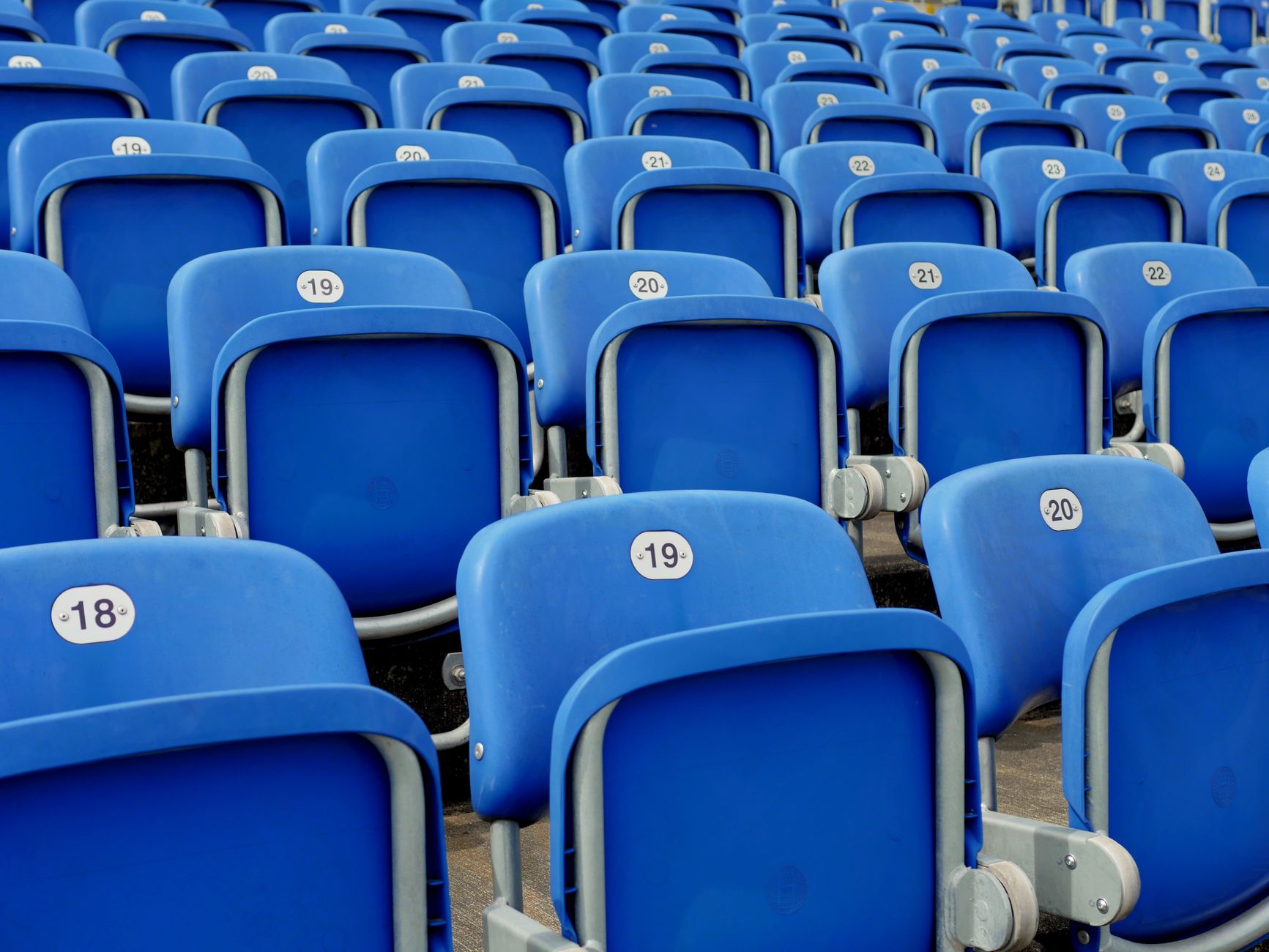
Fröttmaning is older, on paper, than any parking charge ever levied there: the settlement first appears in the historical record in 815 as Freddamaringun, named for a settler called Fridumar — roughly, “the peaceable one”. For close to twelve centuries that stayed a modest village on Munich’s northern edge, hemmed in by the bare Fröttmaninger Heide, today a 347-hectare nature reserve whose soil still turns up ordnance from its years as a Bundeswehr tank-training ground, and by the motorway built past it in the early 1970s. Then, in 2005, the Allianz Arena arrived, and the quiet quarter in the Schwabing-Freimann district became somewhere that, on two or three dozen days a year, has to absorb the traffic of a small town — and on every other day reverts to what it was before: a U-Bahn station on the edge of the city, a car park, a stretch of heathland next door.
Anyone driving to Fröttmaning for an FC Bayern match or a concert is after something different from whatever the everyday commuter wants. It isn’t the cheapest tariff for an eight-hour office day; it’s a single, heavily concentrated arrival and departure within a few hours, alongside roughly 75,000 people who all want the same thing at the same minute. The prices, the routes and even who is responsible for what differ accordingly from anything else filed under “parking on the edge of the city” — and they differ just as sharply from the car parks at Munich Airport, with which the Fröttmaning facilities share nothing beyond, confusingly, the same P1 to P3 numbering.
Car parks P1 to P3: capacity, location, access
The Allianz Arena runs its own car parks under the names P1, P2 and P3 — not to be confused with the identically labelled car parks at Munich Airport, some 30 kilometres to the east, which run an entirely separate tariff system, as covered under parking at Munich Airport. Both sites appear to have reached for the same obvious numbering quite independently; there is no connection between them.
The stadium’s own car parks sit at Werner-Heisenberg-Allee 25, 80939 Munich. Depending on whose figures you use — the operator’s current count against older ones from the Bavarian police — total capacity runs somewhere in the range of 10,000 to 11,000 vehicles, including around 150 designated disabled bays (as of 2026). Clearance height is capped at 2.00 metres; arrive with a roof box, a roof-mounted bike rack or a taller van and there is no room for you in P1 to P3.
Access runs from north and south on separate levels: drivers coming via the A9 from Nuremberg or the A99 from the west follow the traffic-guidance system to the lower approach; those arriving from the north, from Garching, use the upper level. The Arena sits directly at the A9’s Fröttmaning exit, which keeps the drive itself short but also means the entire matchday’s worth of destination traffic funnels through a single motorway junction.
Barrier-free by number-plate recognition: what it means for the price
Since the 2023/24 season, P1 to P3 have had no barriers at all. Cameras read the number plate on the way in and again on the way out; the physical barrier itself has been removed — a change built to do away with the queues at the old pay booths, which on a sell-out matchday used to run to forty minutes.
What you pay depends on when you register. Enter your number plate through the Allianz Arena app or the online portal, in what the club calls the Arena Wallet, by the evening before the match, and the day costs €12. Leave it until matchday itself, or not at all, and it’s €15 — either way you’re not paying at a booth but by credit card, PayPal or, for holders of a myFCB account, SEPA direct debit. Even leaving the stadium without having registered a plate isn’t fatal: you have up to 48 hours after the match to register and settle the fee online, with no fine or reminder letter attached.
Coaches and motorhomes are priced separately, on a dedicated guest-coach area, at somewhere between €15 and €25 depending on vehicle type (as of 2026).
Non-matchdays: what’s left of the matchday price
On an ordinary Tuesday morning, the same entrance with the same camera system carries no trace of a matchday. Visitors to the FC Bayern Museum, the club shop or a stadium tour are charged a flat non-event rate of €5 — the first 45 minutes are free, enough for a quick photo of the façade or a fast trip through the shop without triggering a charge at all.
The gap between €5 on a quiet day and €12 to €15 on a matchday says something about what is actually being priced. This isn’t a conventional parking tariff so much as demand management: with 75,000 potential vehicles chasing roughly 10,000 to 11,000 spaces, the higher price is partly a tool for achieving any kind of orderly distribution at all. Remove that pressure, and the price drops to a good third of its matchday level.
The Fröttmaning P+R facility: same site, a different pricing system
A few hundred metres from Werner-Heisenberg-Allee 25, at number 21 on the same street, sits a second facility that has nothing to do with the Arena itself: the Fröttmaning park-and-ride, run by P+R Park und Ride GmbH. With around 1,300 spaces across nine levels, it counts among the largest park-and-ride facilities anywhere in the Munich network — how the wider park-and-ride principle works across German cities, and where Munich sits by comparison, is set out under park and ride in Germany.
The tariff follows a familiar P+R logic that differs fundamentally from the Arena’s own car park:
| Facility | Operator | Matchday / standard | Non-matchday or with an MVV ticket |
|---|---|---|---|
| Car parks P1–P3 (Arena) | APCOA / FC Bayern | €12–15 | €5 |
| Fröttmaning P+R | P+R Park und Ride GmbH | €10 (no ticket) | €1.50 (with a valid MVV ticket) |
Continue your journey on a valid MVV ticket and the P+R day rate is €1.50, with €4 for each additional day. Park without a ticket — say, because you’re walking on to the Arena rather than boarding the U-Bahn — and the standard rate of €10 a day applies. Ten bays are step-free, and eight EV charging points are run by the Munich municipal utility, SWM. How the city’s whole network of 38 sites and three price levels fits together is set out in our overview of park and ride in Munich.
There is a temptation worth being alert to here. Because the P+R facility sits practically next door to the Arena’s own car park, its €10 standard rate can look like a cheaper alternative to the €12–15 matchday price. The operator itself warns against underestimating this on an event day: occupancy runs higher than usual, and delays on the access roads are to be expected. A facility built for the steady rhythm of commuter traffic hits the same capacity limits as the Arena car parks on a matchday — just under a different operator, and without the Arena’s number-plate infrastructure.
One common assumption is worth clearing up in advance, too. Unlike the 2024 European Championship, whose match tickets included a 36-hour public transport pass, or NFL games at the Arena, whose tickets likewise double as a transit ticket, an ordinary FC Bayern Bundesliga ticket is not a valid MVV fare. Anyone travelling by U-Bahn needs a normal ticket — single fare, strip ticket, Deutschlandticket or day ticket — regardless of whether they also hold a match ticket. In Frankfurt the reverse applies: the admission ticket normally carries the RMV KombiTicket already, as set out under parking at the Deutsche Bank Park.
The U6 on matchdays: a 2.5-minute cycle instead of the usual ten-minute rhythm
The Fröttmaning U-Bahn station is, in a sense, a child of the Arena, even though it predates the stadium. It opened on 30 June 1994 with just two tracks. Once the stadium project was confirmed, the entire station was rebuilt between 2002 and 2005 and expanded to four tracks — a reserve of capacity rarely needed day to day, but one that pays off on a sold-out matchday. Architects Julia Mang-Bohn and Peter Bohn roofed the platforms in a translucent membrane of Teflon-coated fibreglass fabric; the Austrian artist Peter Kogler covered the walls in his characteristic winding line patterns. The station is worth a look even on a day with no match at all.
The real difference is in the frequency. In normal service the U6 runs roughly every ten minutes, with a journey of a good quarter of an hour into the Marienplatz city centre. On an Allianz Arena matchday, MVG tightens that to a train every 2.5 minutes, with the explicit aim of clearing every fan out of Fröttmaning within about an hour of the final whistle. That is a different order of magnitude from any ordinary rush-hour boost, and it explains why the U-Bahn is the more dependable way back into town on a matchday than your own car: while the return leg on the A9 can stretch over hours, a train leaves Fröttmaning every two and a half minutes, regardless of how jammed the road beside it happens to be.
After the final whistle: why leaving takes longer than arriving
Arrival for an FC Bayern home match tends to be more orderly than the image of 75,000 cars turning up at once suggests — fans arrive over a window of two to three hours before kick-off, and the car parks open a full four hours early. Departure, by contrast, concentrates into a narrow window of a few minutes after the final whistle, and that concentration is what makes it the bottleneck. For a sell-out match, allow between an hour and a half and two and a half hours simply to get out of the car park (as of 2026) — not for the journey home as a whole, just for the stretch from your bay to the motorway slip road.
After the match, the Arena’s traffic-guidance system explicitly instructs drivers to use every available lane rather than filing into a single exit route — a counter-intuitive instruction that measurably increases exit capacity when enough drivers follow it. On the A9 itself, traffic regularly backs up towards Garching and further north, while the route into the city centre, helped by the link to the A99, tends to clear a little faster.
Set this exit experience against an ordinary park-and-ride day and the real difference between Fröttmaning on a matchday and Fröttmaning on any other day becomes clear. A commuter who parks around eight in the morning and leaves around six in the evening spreads their arrival and departure across the whole day and rarely meets more than a handful of other cars at the same minute. On a matchday, the same facility compresses into two extremely short windows — and it is that compression, not the raw number of vehicles, that turns the exit into the real test of patience.
Concerts at the Arena: a different crowd, a different tariff
The Allianz Arena stopped being purely a football stadium some time ago. Acts including Taylor Swift, Coldplay, Ed Sheeran, Rammstein and the Rolling Stones have played to crowds of up to 75,000 here — comparable numbers to a home match, but a crowd that generally knows the routes to the Arena far less well than FC Bayern’s regulars do.
The parking tariff for concerts runs to around €20, above the football matchday price (as of 2026), and eligibility isn’t open on a rolling basis but released from a fixed on-sale date ahead of each show. The Arena itself flags waits of more than two hours to leave the car parks after concerts — at the upper end of what you’d expect even after a sold-out football match — and explicitly recommends travelling by U-Bahn.
One detail sets concert days apart from an ordinary matchday. For visitors arriving by U6 at Fröttmaning, larger concerts typically run a free shuttle bus between the station and the stadium entrance (as of 2026) — a service regular Bundesliga visitors have little need for, since the walk from the U-Bahn to the Arena is short and clearly signed, but one an international concert crowd, often carrying more luggage and less local knowledge, tends to appreciate.
Another event-parking case, this time at a Frankfurt exhibition hall rather than a football stadium, is covered under parking at the Festhalle Frankfurt.
What Fröttmaning lacks is, in the end, as telling as what it offers. There is no valet-style handover here, of the kind travellers can use at Munich Airport, where someone parks the car for you — and given the number-plate cameras at every entrance and exit, such a service would in any case be harder to run here than against an airport’s steadier, more evenly spread traffic. Instead, the choice stays a simple one between two routes: your own car, with number-plate recognition, €12 to €15, and an exit that demands patience — or the U6, with its 2.5-minute cycle, an ordinary transport ticket, and the certainty that a train will leave regardless of how jammed the A9 happens to be. For a match or a concert, that trade-off is worth weighing afresh every time — and it looks entirely different on a Tuesday-morning museum visit than it does on a sold-out Saturday evening in May.
Keep reading
City Parking
Frankfurt Christmas Market Parking: Römerberg, Paulsplatz and the Hauptwache
Parking for the 2026 Frankfurt Christmas Market (23 November to 22 December): which car parks serve the Römerberg, Paulsplatz and Hauptwache, what they charge, which streets close, and when park and ride at Borsigallee is worth it.
Dr. Eva Sommer25 September 2026
City Parking
Parking in Central Cologne: Cathedral Car Parks, Kerbside Rules and the Low-Emission Zone
Parking in central Cologne in 2026: what the garages at the cathedral, Heumarkt and the opera charge, €4 an hour at the kerb, the €5 all-day spaces, residents' permits from €100 and the low-emission zone.
Dr. Eva Sommer25 September 2026
City Parking
Parking in Central Stuttgart: Car Parks, New Charges and the Diesel Ban
Parking in central Stuttgart in 2026: €6.40 an hour at the city-centre kerb from 1 October, municipal garages at €3.80, cheaper state-owned car parks, residents' permits at €55 and where the diesel bans stand.
Dr. Eva Sommer25 September 2026
City Parking
Parking at the Deutsche Bank Park: The Forest, the Prebooking Rule and the Fare Inside Your Ticket
Parking at the Deutsche Bank Park in Frankfurt: the Waldparkplatz, Isenburger Schneise and Gleisdreieck lots need a prebooked permit, EUR 6 to 10 on a matchday, EUR 10 to 30 for a concert - and the RMV travel pass bundled into the ticket (as of 2026).
Dr. Eva Sommer17 September 2026
City Parking
Parking in Dresden: €6 a Day at the Semperoper, €28 on the Altmarkt
Parking in Dresden in 2026: the city's three charging zones, the old-town car park ring from €6 to €30 a day, the Äußere Neustadt charged until midnight, and why the Elbe meadows are off limits.
Dr. Eva Sommer17 September 2026