Parking at the Festhalle Frankfurt: Exhibition Grounds Between Concert and Congress
Not an arena on the city fringe, but an Art Nouveau hall in the middle of the exhibition grounds, framed by office towers and a metro stop a few hundred metres away. Drivers heading to the Festhalle don't park on a dedicated venue site; they choose from five commercial car parks sharing the same demand, each pricing itself differently depending on what's on.

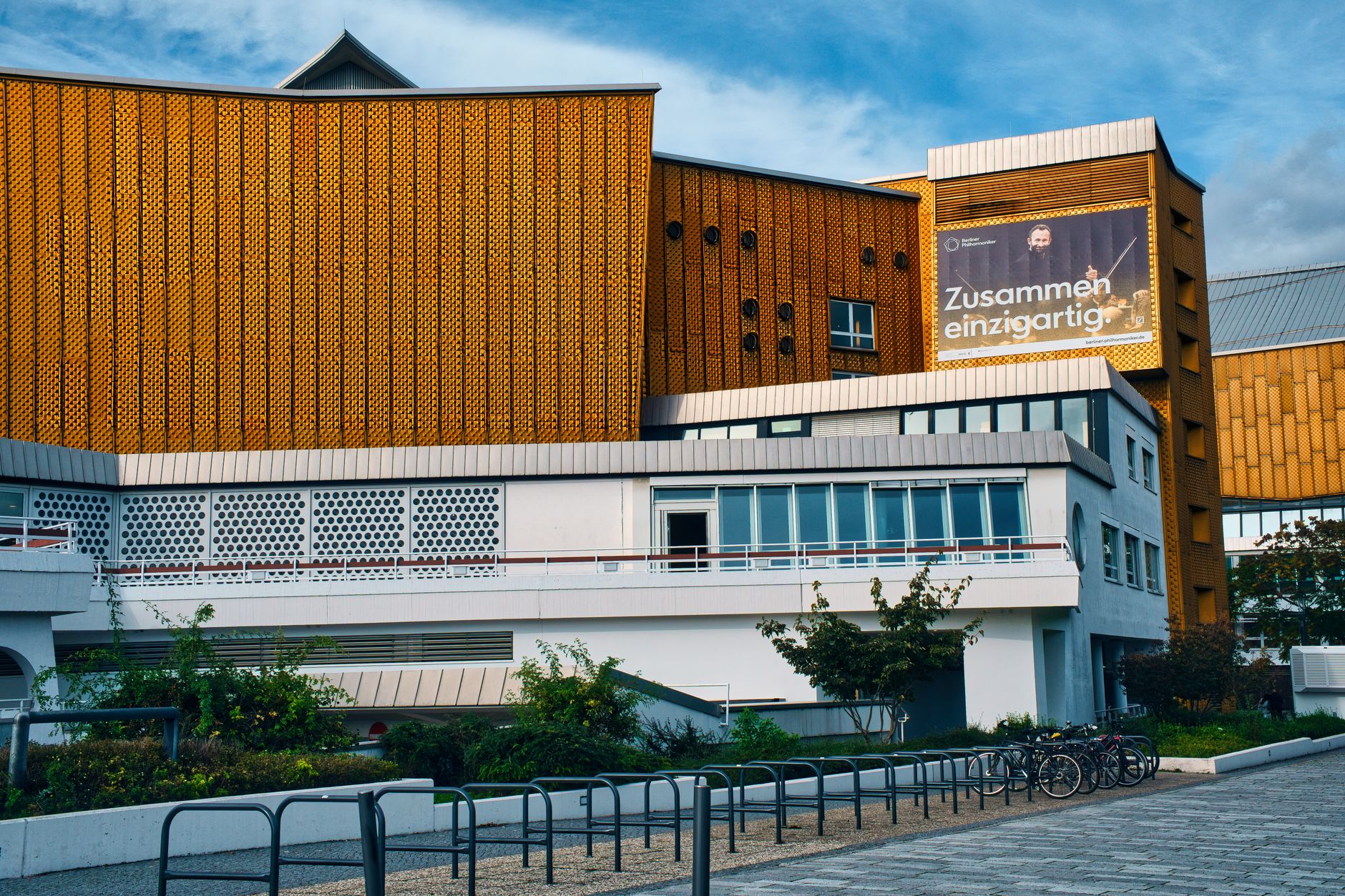
The Festhalle Frankfurt is a building whose dome, completed in 1909, was for a time the largest free-standing dome structure in the world, and whose history runs from Germany’s first motor show through world heavyweight boxing title fights to some of the biggest pop concerts this city has ever hosted. It doesn’t stand alone; it sits inside the Frankfurt exhibition grounds between Ludwig-Erhard-Anlage and Theodor-Heuss-Allee, wedged between the 257-metre Messeturm tower, the congress centre, and, one metro stop away, the main railway station. That location is the decisive difference from almost every other major event venue in Germany: there is no dedicated Festhalle car park with its own operator and its own barrier. Anyone parking here parks in one of several commercial garages that serve the whole exhibition site, with the Festhalle treated as just one of several addresses they supply.
Five car parks, one hall: the choices around the Festhalle
Several large car parks sit within walking distance of the exhibition grounds, and none of them is dedicated exclusively to the Festhalle. The Messeturm car park on Friedrich-Ebert-Anlage 49 offers roughly 900 spaces and is one of the most central options, explicitly recommended by Messe Frankfurt itself for the Festhalle’s “City” entrance; one caveat, though — the operator itself notes it is not step-free, so anyone who needs level access should check an alternative in advance. The Congress Center/Maritim Hotel car park on Theodor-Heuss-Allee 3–5 offers around 460 spaces and sits closer to the southern side, recommended for the “Süd” (South) entrance. Considerably larger is the Skyline Plaza underground car park on Europa-Allee, with roughly 2,400 spaces — a shopping centre garage that regularly doubles as overflow on concert evenings once the venues closer to the exhibition centre fill up. Add to that the WestendGate car park with around 625 spaces and the car park at the Mövenpick hotel, both a little further north towards Bockenheim.
For larger trade fairs with heavier footfall, Messe Frankfurt also operates the Rebstock exhibition car park, right at the Frankfurt-West motorway exit and deliberately positioned for arrivals from the west. When it’s in operation, a free shuttle bus runs from there to the grounds’ City entrance — a model that solves a basic problem of any inner-city exhibition venue: drivers don’t have to fight their way right up to the door; they can leave the last few hundred metres to the shuttle while the car sits outside the densest zone. Rebstock isn’t open around the clock, though — it’s activated event by event, and for a single evening concert at the Festhalle it typically stays closed, whereas for a multi-day public trade fair it’s often the first choice.
The EUR 15 concert flat rate: how evening events are billed
Evening events at the Festhalle have their own simplified pricing model. From 5pm, the Messeturm and Congress Center/Maritim Hotel car parks charge a flat concert rate of EUR 15 until 2am (as of 2026) — regardless of whether the event starts at 7pm or 9pm, and regardless of how long it runs. Billing works through number-plate recognition: your plate is captured automatically on entry, and at the payment machine you must actively select the “Concert” button rather than the standard day tariff before the flat rate applies instead of the running hourly charge. Miss that step and pay the standard tariff instead, and a multi-hour event can end up costing noticeably more than the agreed flat rate.
Outside these two car parks, the concert flat rate explicitly does not apply — Skyline Plaza, WestendGate and Mövenpick charge their own independent day rates, in line with the ordinary city-centre car park pricing broken down for Hauptwache, Goetheplatz and the Alte Oper under car parks in central Frankfurt, which can end up pricier than the flat rate for a multi-hour concert. Anyone heading specifically to an evening concert is therefore best served by one of the two flat-rate car parks, whereas anyone combining a shopping trip at Skyline Plaza with a later concert is already parked there anyway and has no reason to move the car.
Ordinary days versus trade-fair days: two entirely different price levels
Outside the concert flat rate, an ordinary hourly tariff applies at the car parks around the exhibition grounds, running at around EUR 3.90 for the first and each subsequent hour on a quiet weekday with no major event (as of 2026, Messeturm car park) — a price level barely distinguishable from any other central Frankfurt city-centre garage. During a major public trade fair such as the Frankfurt Book Fair or the Musikmesse, that picture changes fundamentally: day tickets then run in the range of roughly EUR 13 to 19 (as of 2026, depending on the facility and the fair), with demand capable of pushing every car park in the vicinity to capacity at the same time. On such days, it’s worth checking operator websites beforehand, since individual garages can fill up by mid-morning while others slightly further out still have room.
The gap between an ordinary weekday and a trade-fair day at the Frankfurt exhibition grounds echoes a pattern found at other major German event venues: at parking for the Allianz Arena in Fröttmaning, for instance, the price sits at EUR 5 on an ordinary day and EUR 12 to 15 on a matchday — a factor of roughly two to three. At the Frankfurt exhibition grounds, that gap can widen to a factor of four or five, because the site sits in the centre of the city and lacks the kind of expansion reserve a stadium car park on the city fringe typically has.
Public transport: the fare that’s already built into your ticket
Anyone weighing car park tariffs on a fair day or concert evening against the cost and uncertainty of a full garage will find one of the strongest arguments for leaving the car at home in how well the site is connected. The U4 underground line stops at “Festhalle/Messe,” just one stop from the main railway station and directly on the grounds; tram lines 16 and 17 serve the same stop as the third station out from the city centre. Travellers arriving by train also have the S-Bahn lines S3, S4, S5 and S6 to “Frankfurt (Main) Messe” station; from the airport, the route runs via S8 or S9 to the main station with a change there.
The real advantage, though, isn’t the frequency of service but a rule that many first-time Festhalle visitors overlook: tickets for concerts and other events at the Festhalle typically double automatically as a valid fare for the entire Rhine-Main transport network, usually from up to five hours before the event starts — a perk you’d have to buy a separate regular ticket for at the Allianz Arena in Fröttmaning, as the comparison with matchday parking in Fröttmaning shows. For a Festhalle concert, that means anyone who already holds a ticket doesn’t need to buy an additional fare to get there, and can travel straight from home by train or metro without sorting out a separate ticket for the return journey beforehand. The same Frankfurt logic applies at the Deutsche Bank Park, though there it is paired with a requirement to prebook every single parking space, as parking at the Deutsche Bank Park sets out.
From motor show to pop culture: what shapes the Festhalle today
For more than seven decades, the Internationale Automobil-Ausstellung, or IAA, was the defining event of the Festhalle and the whole exhibition site — one of the largest motor shows in the world, regularly drawing hundreds of thousands of visitors specifically to these grounds and generating, on those days, parking demand comparable to a weeks-long public festival. Since 2021, the show, now rebranded IAA Mobility, has no longer taken place in Frankfurt but in Munich instead, under a concept that reaches beyond the classic motor car into micromobility and connected transport systems; for Frankfurt, that has meant losing one of the most traffic-intensive fixtures in the grounds’ annual calendar.
What has taken its place is mainly the established specialist fairs — the Frankfurt Book Fair, the Musikmesse, Ambiente — supplemented by a dense programme of concerts by international acts who choose the Festhalle specifically for its acoustics and central location when booking a German date. For parking, that shift mostly means one thing: instead of a single annual mega-event with an exceptional traffic state, demand today is spread across considerably more, smaller occasions throughout the year — a pattern that shows up in car park occupancy as steadier, but rarely extreme, demand, rather than one single event that dwarfs everything else.
Park and ride as an out-of-town alternative
Anyone wary of both the central car parks and an ordinary drive into town can find an overview of Park & Ride facilities across the Rhine-Main region at pundr.hessen.de, several of which connect directly to the exhibition grounds by metro or train. How Frankfurt’s park-and-ride system has developed overall, and where it stands compared with other major German cities, is covered in the overview of park and ride in Frankfurt — a useful companion piece for commuters who already travel regularly into the Rhine-Main area and only occasionally head to the Festhalle itself.
In the end, the choice comes down to two very different logics: the car, which needs one of the five car parks around the grounds and whose price swings between EUR 3.90 on a quiet weekday and up to EUR 19 on a trade-fair day — or the U4, which reaches the Festhalle’s dome directly in a single stop from the main station and is, for most events, already included in the ticket price. For a single evening concert with the EUR 15 flat rate, the car may still be the more convenient choice; on a packed trade-fair day with thousands of professional visitors arriving at once, it quickly becomes clear why Messe Frankfurt itself explicitly recommends arriving by public transport.
Keep reading
City Parking
Parking at the Deutsche Bank Park: The Forest, the Prebooking Rule and the Fare Inside Your Ticket
Parking at the Deutsche Bank Park in Frankfurt: the Waldparkplatz, Isenburger Schneise and Gleisdreieck lots need a prebooked permit, EUR 6 to 10 on a matchday, EUR 10 to 30 for a concert - and the RMV travel pass bundled into the ticket (as of 2026).
Dr. Eva Sommer17 September 2026
City Parking
Car Parks in Central Frankfurt: Tariffs, the Green Sticker and the One-Hour Rule
Parking in central Frankfurt in 2026: tariffs at Hauptwache, Goetheplatz, Alte Oper, Dom/Römer, the main station and Skyline Plaza, the low-emission zone, and why kerbside parking stops after sixty minutes.
Dr. Eva Sommer17 September 2026
City Parking
Frankfurt Christmas Market Parking: Römerberg, Paulsplatz and the Hauptwache
Parking for the 2026 Frankfurt Christmas Market (23 November to 22 December): which car parks serve the Römerberg, Paulsplatz and Hauptwache, what they charge, which streets close, and when park and ride at Borsigallee is worth it.
Dr. Eva Sommer25 September 2026
City Parking
Parking in Central Cologne: Cathedral Car Parks, Kerbside Rules and the Low-Emission Zone
Parking in central Cologne in 2026: what the garages at the cathedral, Heumarkt and the opera charge, €4 an hour at the kerb, the €5 all-day spaces, residents' permits from €100 and the low-emission zone.
Dr. Eva Sommer25 September 2026
City Parking
Parking in Central Stuttgart: Car Parks, New Charges and the Diesel Ban
Parking in central Stuttgart in 2026: €6.40 an hour at the city-centre kerb from 1 October, municipal garages at €3.80, cheaper state-owned car parks, residents' permits at €55 and where the diesel bans stand.
Dr. Eva Sommer25 September 2026